How to Legally Relocate Your Business Abroad: A Step-by-Step Guide

Margaret Whitfield
17 April 2026
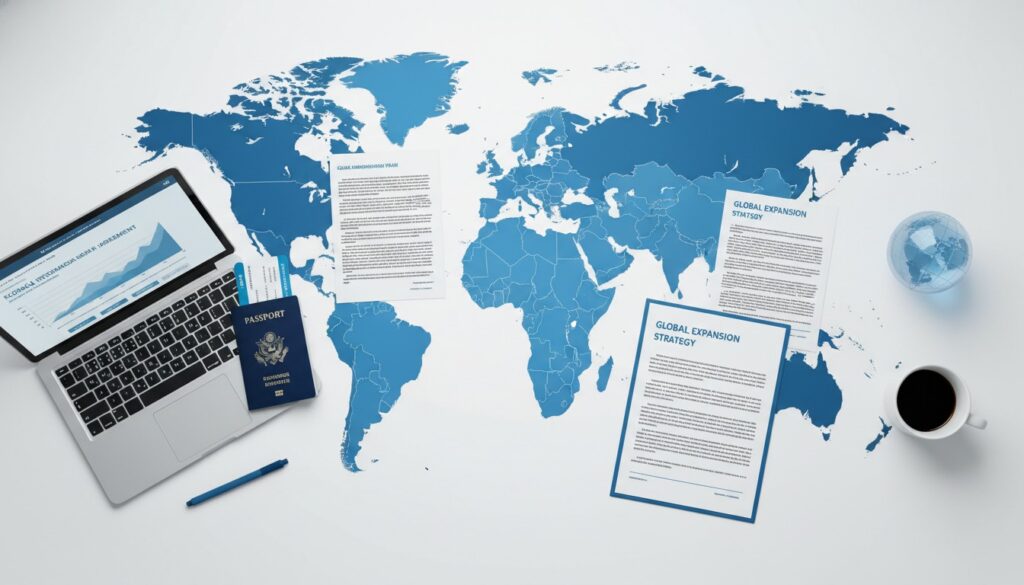
How to Legally Relocate Your Business Abroad: A Step-by-Step Guide
Expanding your business beyond borders is no longer reserved for Fortune 500 companies. In today’s hyper-connected global economy, small and medium-sized enterprises are increasingly looking abroad for lower operating costs, favorable tax environments, access to new markets, and a better quality of life for their founders. But making the leap from thinking about it to actually doing it requires careful legal planning, strategic foresight, and a deep understanding of international business law.
In this comprehensive guide, we’ll walk you through the exact legal steps you need to take to relocate your business abroad — from initial research and entity formation to tax compliance and intellectual property protection. Whether you’re a solo entrepreneur eyeing Portugal or a growing startup considering Singapore, this roadmap will help you navigate the complexities with confidence.
Step 1: Evaluate Your Motivation and Choose the Right Destination
Before you file a single document, you need to answer a fundamental question: Why are you relocating, and where should you go?
Your motivation will shape every decision that follows. Common reasons include:
- Tax optimization — Countries like the UAE, Estonia, and Paraguay offer favorable corporate tax rates or territorial tax systems.
- Access to talent — Tech hubs in places like Berlin, Lisbon, or Bangalore provide deep talent pools.
- Market expansion — Being physically present in a target market can dramatically improve sales and partnerships.
- Lifestyle and cost of living — Many entrepreneurs relocate to enjoy a higher quality of life at a lower cost.
- Regulatory environment — Some industries thrive in jurisdictions with lighter or more innovation-friendly regulations.
- Consult the World Bank’s Ease of Doing Business Index to compare countries on metrics like starting a business, registering property, and enforcing contracts.
- Engage a local attorney in your shortlisted countries to get a realistic picture of the regulatory landscape.
- Talk to other entrepreneurs who have already made the move. Online communities like Reddit’s r/digitalnomad and Nomad List forums are goldmines of firsthand experience.
- Visit the country for at least 2–4 weeks before committing. Experience the bureaucracy, the culture, and the infrastructure firsthand.
- Sole Proprietorship / Sole Trader — Simple to set up but offers no liability protection.
- Limited Liability Company (LLC or equivalent) — The most popular choice for relocating entrepreneurs; separates personal and business assets.
- Branch Office — An extension of your existing home-country entity. Useful if you want to maintain your original company.
- Subsidiary — A new, separate legal entity owned by your parent company. Offers the most protection but is more complex to manage.
- Representative Office — Allows you to have a presence in a country without conducting direct commercial activity. Ideal for market research phases.
- Entrepreneur / Startup Visas — Countries like Canada, the UK, France, and the Netherlands offer specific visa categories for entrepreneurs who meet certain criteria (business plan, funding, innovation).
- Investor Visas — If you’re willing to invest a significant amount of capital (often $100K–$500K+), many countries offer residency in return. Portugal’s Golden Visa and Spain’s equivalent are well-known examples.
- Digital Nomad Visas — A newer category offered by countries like Estonia, Croatia, Barbados, and Costa Rica. These typically allow remote work but may not permit local business operations.
- Work Permits via Your Own Company — In some jurisdictions, you can sponsor your own work permit through the company you establish. This is common in Singapore, Germany, and the UAE.
- Start the visa application process at least 3–6 months before your planned move date.
- Gather apostilled documents early — birth certificates, criminal background checks, and educational credentials often need to be officially authenticated.
- Hire an immigration attorney in the destination country. Immigration law changes frequently, and a local expert will save you time and costly mistakes.
- Prepare for in-person appointments at consulates or immigration offices. Many countries still require physical presence for biometrics and interviews.
- Exit taxes — Some countries (notably the US, Germany, and France) impose taxes on unrealized gains when you leave.
- Final tax returns — You’ll need to file a final corporate tax return and possibly a final personal tax return.
- Deregistration — Formally dissolve or deregister your company with the relevant authorities to avoid ongoing filing obligations.
- Register for corporate taxes with the local tax authority immediately upon incorporation.
- Understand VAT/GST obligations — If you’re selling goods or services, you may need to register for and collect value-added tax.
- Check for tax treaties — Many countries have Double Taxation Agreements (DTAs) that prevent you from being taxed on the same income in two jurisdictions. The OECD maintains a comprehensive database of these treaties.
- Hire a local accountant who specializes in international businesses. This is not the area to cut costs.
- Trademarks: File for trademark registration in your new country. Consider using the Madrid Protocol system, which allows you to file a single international trademark application covering multiple countries.
- Patents: If you hold patents, explore the Patent Cooperation Treaty (PCT) for streamlined international filings.
- Copyrights: While copyright protection is somewhat automatic under the Berne Convention (which most countries have signed), registration in your new country strengthens your enforcement position.
- Trade Secrets and NDAs: Ensure your employment contracts and non-disclosure agreements are enforceable under local law. What’s enforceable in California may be worthless in the Philippines.
- Domain Names: Secure country-specific domain extensions (e.g., `.de` for Germany, `.co.uk` for the UK) to protect your brand online.
- Apply in person whenever possible. Many banks require face-to-face meetings for business account openings.
- Prepare thorough documentation: business plan, proof of address, identification, articles of incorporation, and a clear explanation of your business model and expected transaction volumes.
- Consider fintech alternatives like Wise Business, Mercury (for US entities), or Revolut Business as interim solutions while you secure a traditional bank account.
- Don’t close your home-country bank account immediately. Maintain it as a backup and for any remaining obligations.
- Understand currency risk. If your revenue is in one currency and your expenses in another, consider hedging strategies or multi-currency accounts.
- A local business attorney — For entity formation, contract review, and regulatory compliance.
- An international tax advisor — Ideally someone who understands both your home country and destination country tax systems.
- A local accountant or bookkeeper — For day-to-day financial management and local tax filings.
- An immigration lawyer — For visa applications and renewals.
- A local business mentor or advisor — Someone who understands the cultural nuances of doing business in your new country.
- Underestimating timelines — Incorporation, visa processing, and bank account opening can each take weeks or months. Plan accordingly.
- Ignoring local labor laws — Hiring employees abroad comes with obligations around minimum wage, social security contributions, termination protections, and more. These vary wildly between countries.
- Failing to maintain substance — Many jurisdictions require that your company has real economic substance (office space, local employees, local decision-making) to qualify for tax benefits. A shell company with no local presence may be challenged by tax authorities.
- Not planning for the worst case — What happens if the relocation doesn’t work out? Have an exit strategy. Know the costs and procedures for dissolving your foreign entity if needed.
- Neglecting data protection laws — If you handle customer data, you must comply with local data protection regulations. The EU’s GDPR is the most well-known, but countries like Brazil (LGPD), Japan (APPI), and others have their own frameworks.
- Download our free International Relocation Checklist to organize your next steps.
- Subscribe to our newsletter for weekly insights on global business strategy, tax optimization, and international entrepreneurship.
- Share this guide with a fellow entrepreneur who’s considering the move — the more informed our community is, the better decisions we all make.
How to Research Your Destination
Don’t rely on blog posts alone (yes, including this one). Take these concrete steps:
Pro Tip: Create a weighted decision matrix comparing your top 3–5 countries across factors like tax burden, ease of incorporation, visa options, language barriers, and quality of life. Assign scores and let the data guide your decision.
Step 2: Understand the Legal Structures Available
Once you’ve chosen your destination, the next critical step is determining what type of legal entity you’ll establish. This decision affects your tax liability, personal liability, ability to hire employees, and access to banking.
Common business structures available in most jurisdictions include:
Key Considerations
| Factor | Branch Office | Subsidiary | New LLC |
|—|—|—|—|
| Liability Protection | Low | High | High |
| Tax Complexity | Medium | High | Low–Medium |
| Setup Cost | Low | High | Medium |
| Operational Flexibility | Limited | Full | Full |
| Best For | Testing markets | Large operations | Fresh starts |
Important: Some countries have restrictions on foreign ownership. For example, in Thailand, foreigners generally cannot own more than 49% of a Thai limited company in certain sectors. In Indonesia, minimum capital requirements for foreign-owned companies can be substantial. Always verify ownership rules before committing.
Step 3: Navigate Visa and Immigration Requirements
One of the most overlooked aspects of business relocation is personal immigration status. You can’t run a business in a country where you don’t have the legal right to work or reside.
Here are the most common visa pathways for business owners:
Warning: Never attempt to run a business on a tourist visa. This is illegal in virtually every country and can result in deportation, fines, and being banned from re-entry. The short-term savings are never worth the long-term risk.
Tips for a Smooth Immigration Process
Step 4: Handle Tax Obligations on Both Ends
Taxation is arguably the most complex — and most consequential — aspect of international business relocation. Get it wrong, and you could face double taxation, penalties, or even criminal charges.
Here’s what you need to understand:
Closing or Restructuring Your Home-Country Entity
If you’re dissolving your business in your home country, you’ll likely trigger:
Setting Up Tax Compliance in Your New Country
Critical Note for US Citizens: The United States taxes its citizens on worldwide income regardless of where they live. If you’re American, relocating your business abroad does not eliminate your US tax obligations. You’ll need to file annually with the IRS and potentially report foreign bank accounts (FBAR) and foreign financial assets (FATCA). Consult a US-licensed international tax advisor.
Step 5: Protect Your Intellectual Property Internationally
Your trademarks, patents, copyrights, and trade secrets don’t automatically transfer across borders. Intellectual property rights are territorial, meaning protection in one country doesn’t guarantee protection in another.
Here’s your IP protection checklist:
Step 6: Open International Bank Accounts and Manage Finances
Banking is one of the most frustrating parts of relocating a business abroad. Due to anti-money laundering (AML) regulations, banks are increasingly cautious about opening accounts for foreign-owned businesses.
Tips for Success
Step 7: Build Your Local Support Team
No matter how much research you do online, nothing replaces having trusted local professionals on the ground. Your core team should include:
“The single biggest mistake I see entrepreneurs make when relocating abroad is trying to do everything themselves. The money you spend on professional advice upfront saves you ten times that amount in mistakes, penalties, and lost opportunities.” — International Business Attorney
Common Pitfalls to Avoid
Let’s be honest: international business relocation is riddled with potential mistakes. Here are the ones we see most frequently:
Conclusion
Relocating your business abroad is one of the most transformative decisions you can make as an entrepreneur. Done correctly, it opens doors to new markets, reduces costs, optimizes your tax position, and enriches your life with international experience. Done poorly, it can lead to legal headaches, financial losses, and years of regulatory cleanup.
The key to success is preparation, professional guidance, and patience. Don’t rush the process. Treat each step — from choosing your destination to protecting your intellectual property — as a critical building block in your international business foundation.
Remember: the goal isn’t just to relocate. It’s to relocate legally, strategically, and sustainably so that your business thrives in its new home for years to come.
Take the Next Step Today
Ready to start planning your international business relocation? Here’s what to do right now:
Written by James Wilson | Global Relocation | Last updated: 2024